

How Tides Influence Fishing in Naples, Marco Island & the Everglades
If you want to catch more fish in Naples, Marco Island, or the Everglades, understanding the tides is just as important as choosing the right bait or rod. As a full-time guide running Everglades Guide Service and Naples fishing charters, I’ve learned that tides dictate almost everything our inshore species do. Whether someone is booking a fishing charter in Naples, FL or planning a family fishing trip on Marco Island, the tide chart is one of the first things I look at each morning.
Along Southwest Florida’s coastline, our most popular species — snook, redfish, tarpon, mangrove snapper, sea trout, sheepshead, and even small sharks — move with the water. On a rising tide, baitfish, shrimp, and crabs push into the mangroves, back bays, and oyster bars. Predators like snook and redfish slide right in behind them. This makes high incoming tides some of the best times for snook fishing and redfish fishing around Naples, Goodland, and the 10,000 Islands.
When the tide turns and begins to fall, the entire food chain shifts. Water drains out of the backcountry and funnels into creek mouths, channels, and structure edges. These natural choke points concentrate bait, and gamefish set up perfectly to ambush whatever washes out. Many of the top Naples fishing and Marco Island fishing spots fire up during the last two hours of outgoing water. This is especially true for redfish, pompano, and mangrove snapper, which feed aggressively as the water moves.
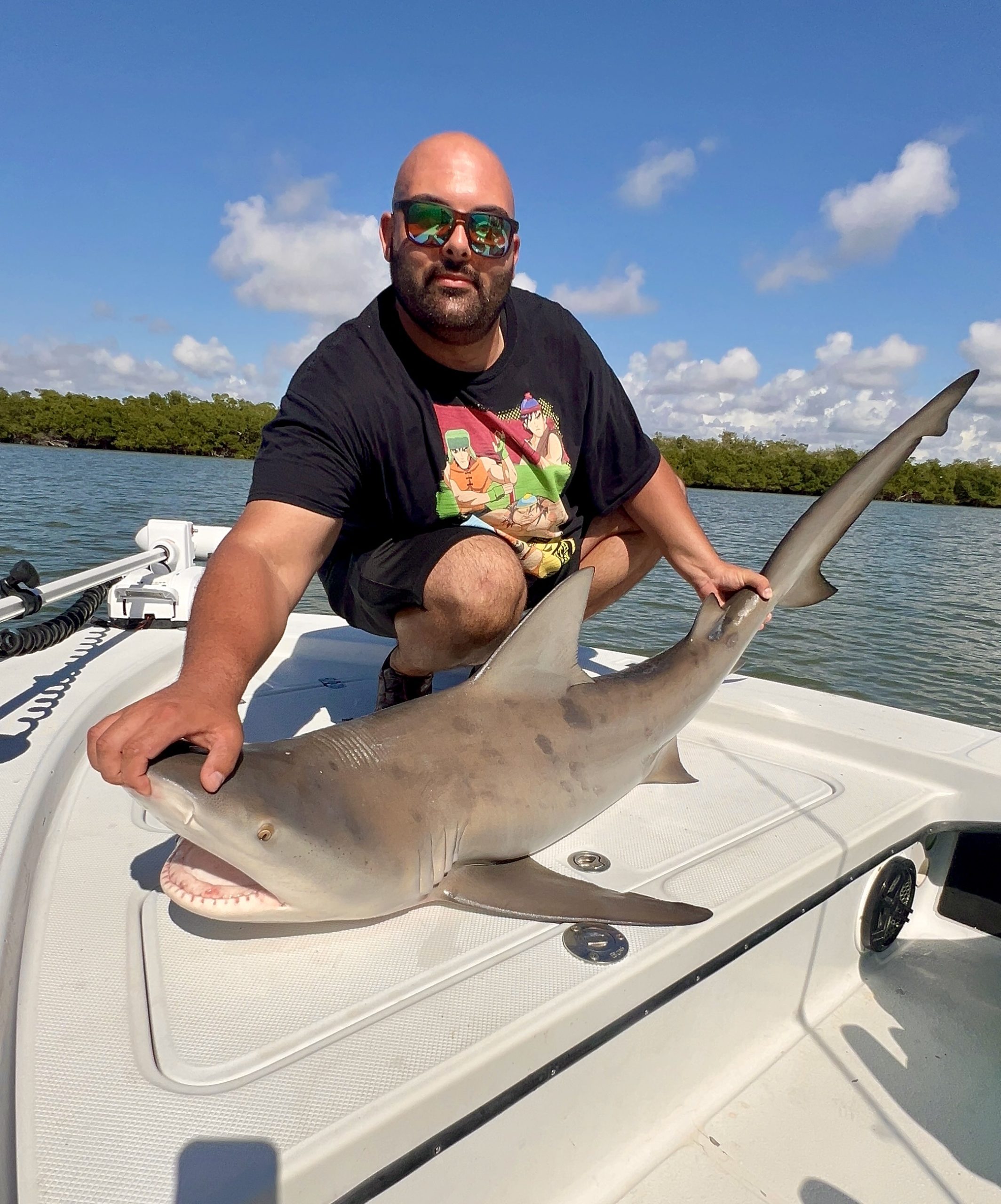
Tarpon fishing is also heavily tied to tides. In late spring and summer, tarpon stage along the beaches and passes, often showing the strongest activity on strong incoming tides when clean Gulf water pushes into the system. Shark fishing follows a similar pattern; sharks patrol the edges of flats, beaches, and channels during fast-moving water, especially on tide changes that stir up bait. This is why so many of our shark fishing trips around Naples and Marco Island depend on timing the tide correctly rather than simply choosing a time of day.
Another overlooked factor is how tides affect water temperature and clarity, two important pieces of the fishing puzzle in SW Florida. During winter cold fronts, a warm incoming tide can raise backcountry temperatures several degrees, turning slow snook into active feeders. In the heat of summer, an outgoing tide that pulls cooler water from the back bays can spark a strong bite. Water clarity also shifts with tidal flow; many of the best offshore fishing and nearshore deep sea fishing days happen right after a clean incoming tide pushes silt and algae away from the beaches.
Tides don’t just impact where fish feed — they influence navigation and safety, especially in the Everglades and the 10,000 Islands where shallow oyster bars, hidden banks, and narrow creeks are everywhere. A strong outgoing tide can turn a harmless-looking bay into a mudflat. Planning your route around the tide prevents running aground or getting stuck deep in the mangroves. Visitors booking fishing charters in Naples, FL often don’t realize how fast the water drops here, and that’s one reason local knowledge is so valuable.
Tides even shape the wildlife experience on the water. Dolphins feed more actively on falling tides when bait washes out. Ospreys, egrets, and herons hunt along exposed shorelines during low tide.
Whether you’re targeting snook in the mangroves, redfish on the flats, tarpon along the beaches, or exploring offshore fishing options, understanding how tides move through Naples and Marco Island is one of the most powerful tools you can use. Before you head out, always check the tide chart — it’s the key to fishing success throughout Southwest Florida.
Source link