

The first month of 2026 was the world’s fifth-warmest January in analyses of global weather data going back to 1850, NOAA’s National Centers for Environmental Information, or NCEI, reported Feb. 11. NASA and the European Copernicus Climate Change Service also rated January 2026 as the fifth-warmest January on record. The past two months — January 2026 and December 2025 — were both their respective fifth-warmest months on record, marking the first time since January 2023 (ninth-warmest) and February 2023 (sixth-warmest) that two consecutive months did not rank in the top-four warmest months on record globally.

Global land areas had their fifth-warmest January on record in 2026, and global oceans also had their fifth-warmest January, according to NOAA. Africa had its warmest January; Oceana, its third-warmest; North America, its sixth-warmest; and South America, its ninth-warmest. Asia had above-average temperatures, while Europe was near average in temperature.
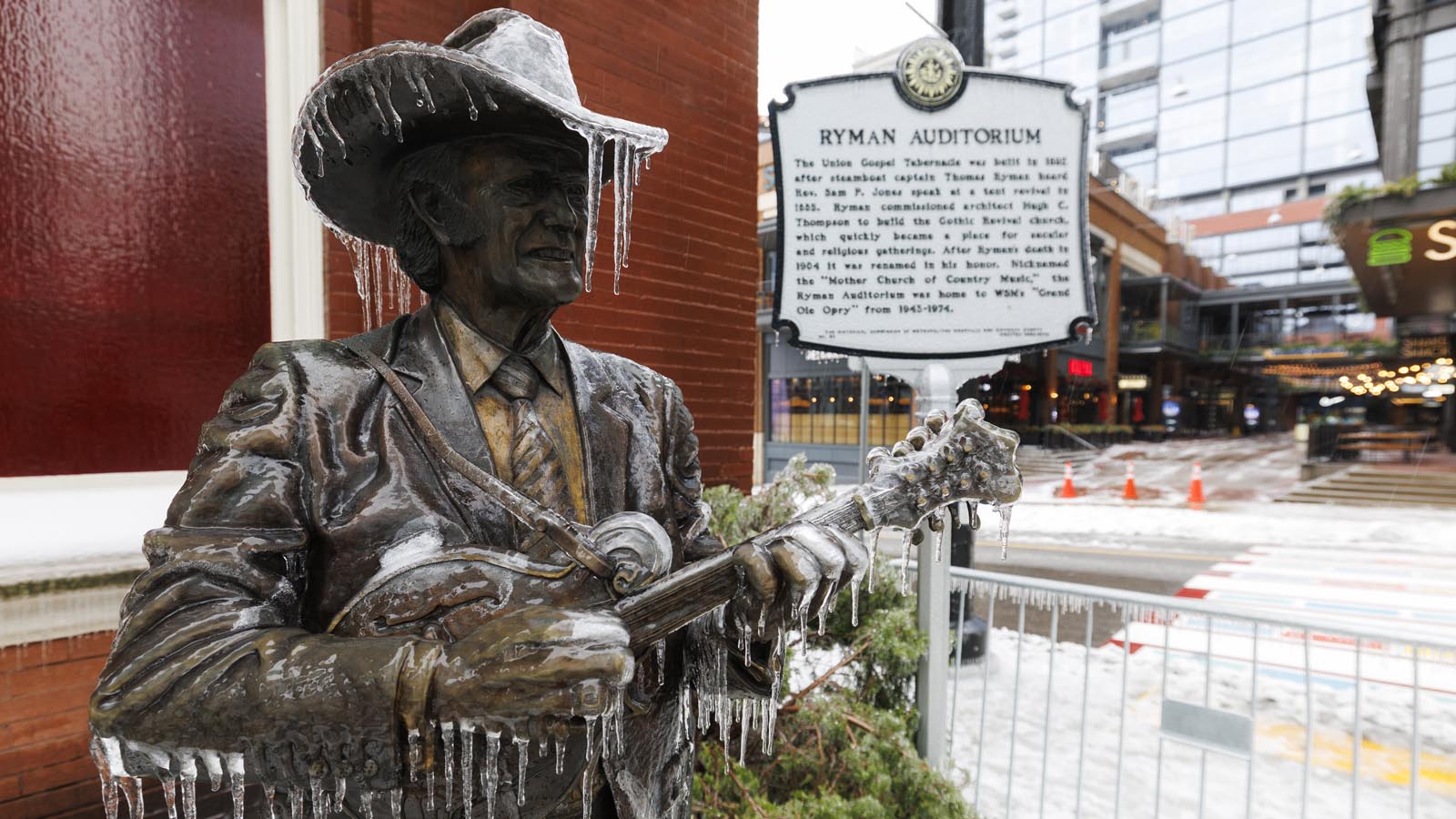
Despite the intense cold blast toward the end of the month, the contiguous U.S. still had above-average temperatures in January, ranking in the top third of the 132-year record. Oregon, Arizona, Utah, California, Wyoming, Nevada, and Idaho had a top-10 warmest January; no state recorded a top-30 coldest January.
According to the February 3 U.S. Drought Monitor report, about 44.5% of the continental U.S. was in drought, up about 1.7% from the end of December. The winter so far (December plus January) is the second-driest on record for Arkansas and Missouri and among the top 10 driest in seven other states from North Carolina to Texas.
Snow cover in Europe and the Eastern U.S. was above average in January but was below average over the Western U.S. and much of Asia. Overall, Northern Hemisphere snow cover during January 2026 was near the 1967-2026 average.
An El Niño event looking more likely to develop this year
A weak La Niña event continues in the Eastern Pacific, NOAA reported in its January monthly discussion of the state of the El Niño/Southern Oscillation, or ENSO (their next update is scheduled for Feb. 12). La Niña conditions are expected to end in the January-March 2026 period (75% chance), becoming ENSO-neutral. An increasing chance of El Niño conditions is predicted as 2026 progresses, according to the Columbia University International Research Institute for Climate and Society forecast issued Jan. 20. The forecast for the August-September-October peak of hurricane season called for a 48% chance of El Niño, a 41% chance of ENSO-neutral, and an 11% chance of La Niña, with NOAA giving a 35% chance of moderate or stronger El Niño conditions. El Niño conditions tend to suppress Atlantic hurricane activity through an increase in wind shear, but La Niña conditions tend to have the opposite effect.

This month, NOAA switched to using the Relative Oceanic Niño Index, or RONI, as its standard ENSO monitoring tool. This tool uses sea surface temperatures across the tropics to adjust the Oceanic Niño Index, making it a better gauge of how ENSO is expressed in a warming climate. Under RONI, the conditions over recent months have already qualified 2025-26 as a La Niña period for the historical record.
Read: A new and better way to keep tabs on El Niño
Arctic sea ice: 2nd-lowest January extent on record
Arctic sea ice extent during January 2026 was virtually tied with January 2025 as the second-lowest in the 48-year satellite record, behind only January 2018, according to the National Snow and Ice Data Center. The January mark follows a December that had a record-low sea ice extent. The Arctic had its sixth-warmest January on record in 2026. Antarctic sea ice extent in January 2026 was below average, ranking 13th-lowest since 1979. The Antarctic had above-average temperatures in January, ranking as the 46th-warmest since 1850.
Notable global heat and cold marks for January 2026
Weather records expert Maximiliano Herrera has characterized the level of heat records that have been set thus far in 2026 as more characteristic of El Niño conditions, not La Niña. Below are some of the records he documented in January. Follow him on Bluesky: @extremetemps.bsky.social or Twitter: @extremetemps:
– Hottest temperature in the Northern Hemisphere: 41.5°C (106.7°F) at Bokoro, Chad, Jan. 20
– Coldest temperature in the Northern Hemisphere: -57.3°C (-71.1°F) at Summit, Greenland, Jan. 11;
– Hottest temperature in the Southern Hemisphere: 50.0°C (120.7°F) at Hemelin Pool, Australia, Jan. 20 and Andamuuka, Australia, Jan. 29, and Port Augusta, Australia, Jan. 30; and
– Coldest temperature in the Southern Hemisphere: -47.6°C (-53.7°F) at Concordia, Antarctica, Jan. 31.
Major weather stations in January: 41 all-time heat records, 1 all-time cold records
Among global stations with a record of at least 40 years, 41 set, not just tied, an all-time heat record in January, and one station set an all-time cold record:
Rio Bueno (Chile) max. 41.4°C, Jan. 4
Osorno (Chile) max. 40.0°C, Jan. 4
Rio Negro (Chile) max. 38.5°C, Jan. 4
Puerto Varas (Chile) max. 36.4°C, Jan. 4
Ancud (Chile) max. 34.4°C, Jan. 4
Chile Chico (Chile) max. 37.7°C, Jan. 4
Linxi (China) min. -33.1°C, Jan. 20
Padang (Indonesia) max. 35.4°C, Jan. 24
Dohne (South Africa) max. 42.4°C, Jan. 26
Ceduna (Australia) max. 49.5°C, Jan. 26
Streaky Bay (Australia) max. 47.5°C, Jan. 26
Cleve (Australia) max. 46.2°C, Jan. 26
Stanthorpe (Australia) max. 38.2°C, Jan. 26
Guyra (Australia) max. 35.3°C, Jan. 26
Renmark (Australia) max. 49.6°C, Jan. 27
Walpeup (Australia) max. 48.9°C, Jan. 27
Mildura (Australia) max. 48.6°C, Jan. 27
Loxton (Australia) max. 48.2°C, Jan. 27
Swan Hill (Australia) max. 47.7°C, Jan. 27
Longerenong (Australia) max. 48.1 °C, Jan. 27
Omeo (Australia) max. 40.5°C, Jan. 27
Warrnambool (Australia) max. 45.0°C, Jan. 27
Broken Hill (Australia) max. 47.8°C, Jan. 27
Tibooburra (Australia) max. 48.7°C, Jan. 28
Hay (Australia) max. 48.4°C, Jan. 28
Khancoban (Australia) max. 43.6°C, Jan. 28
Corowa (Australia) max. 47.0°C, Jan. 28
Perisher Valley (Australia) max. 30.8°C, Jan. 28
Falls Creek (Australia) max. 30.5°C, Jan. 28
Rio Gallegos (Argentina) max. 36.4°C, Jan. 29
Andamooka (Australia) max. 50.0°C, Jan. 29
Marree (Australia) max. 49.8°C, Jan. 29
Leigh Creek (Australia) max. 48.2°C, Jan. 29
Port Augusta (Australia) max. 50.0°C, Jan. 30
Tarcoola (Australia) max. 49.7°C, Jan. 30
Woomera (Australia) max. 49.6°C, Jan. 30
Arkaroola (Australia) max. 45.9°C, Jan. 30
Hawker (Australia) max. 46.8°C, Jan. 30
Yongala (Australia) max. 45.0°C, Jan. 30
White Cliffs (Australia) max. 48.9°C, Jan. 31
Condobolin (Australia) max. 46.9°C, Jan. 31
Warkworth (New Zealand) max. 32.7°C, Jan. 31
Five nations or territories have set monthly all-time heat records in 2026:
– Jan. (6): U.S. Virgin Islands, Saba, Sao Tome and Principe, Congo Brazzaville, Aruba
One nation or territory set an all-time monthly cold record in January: Cocos Islands.
Bob Henson contributed to this post

Source link